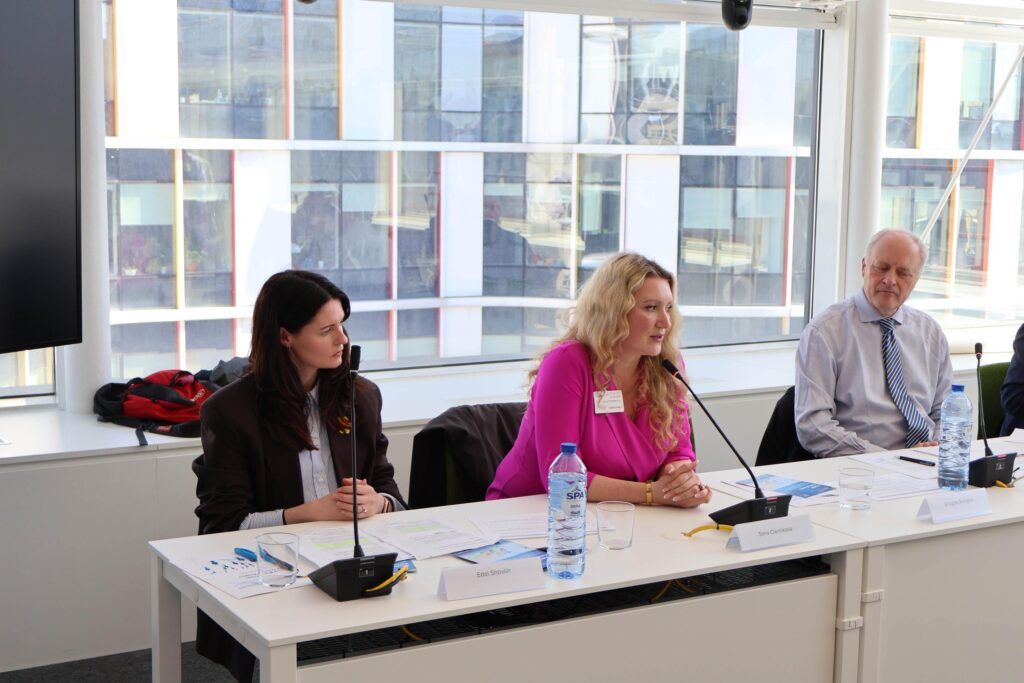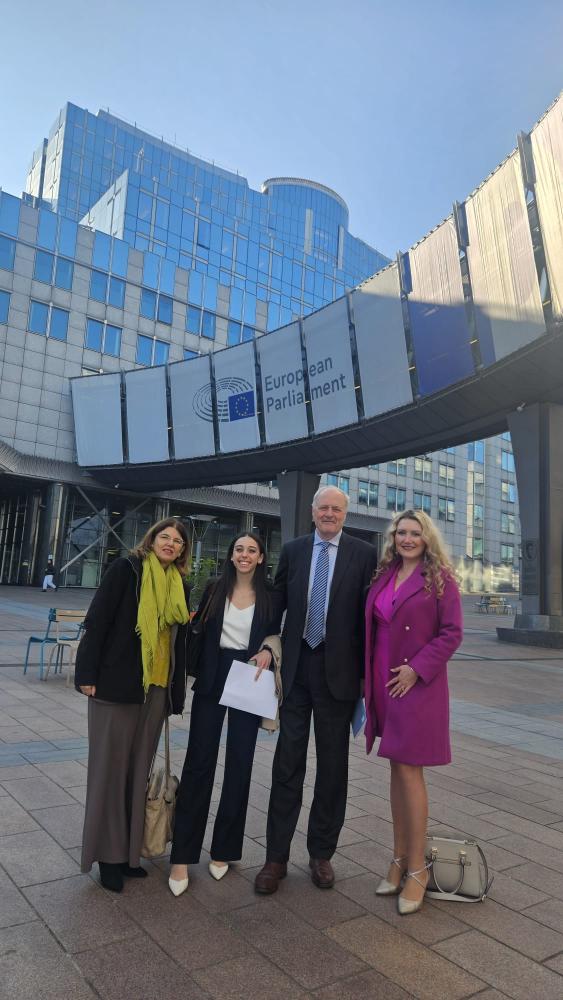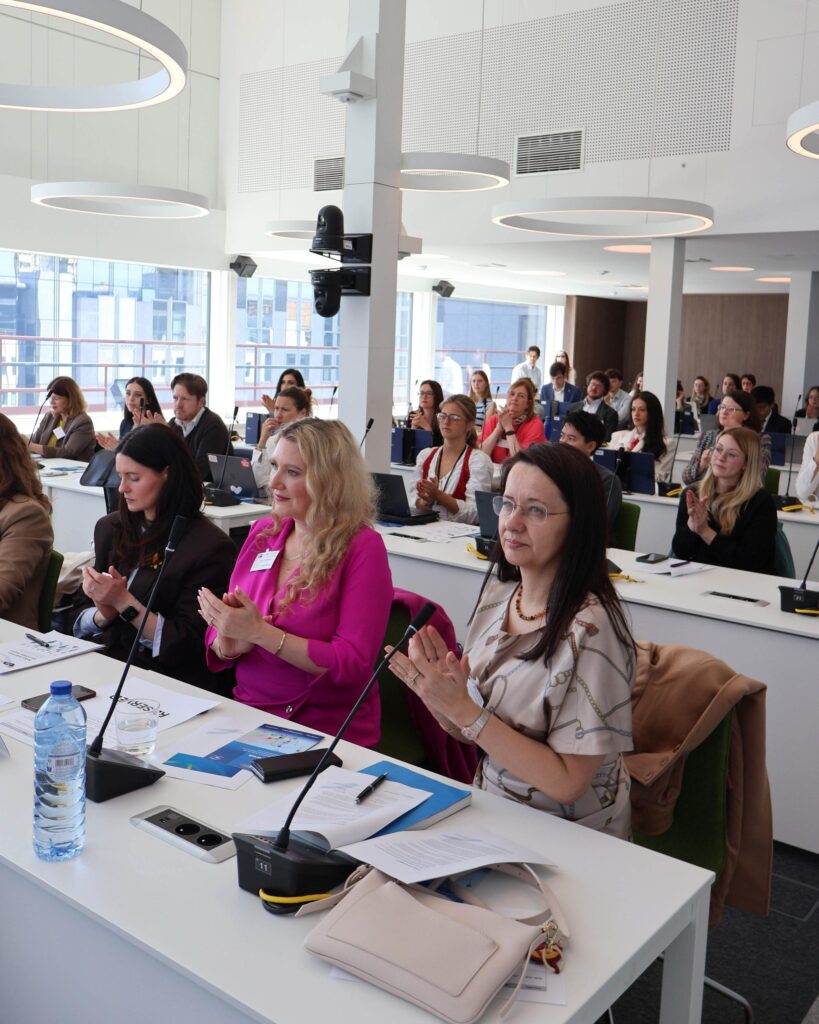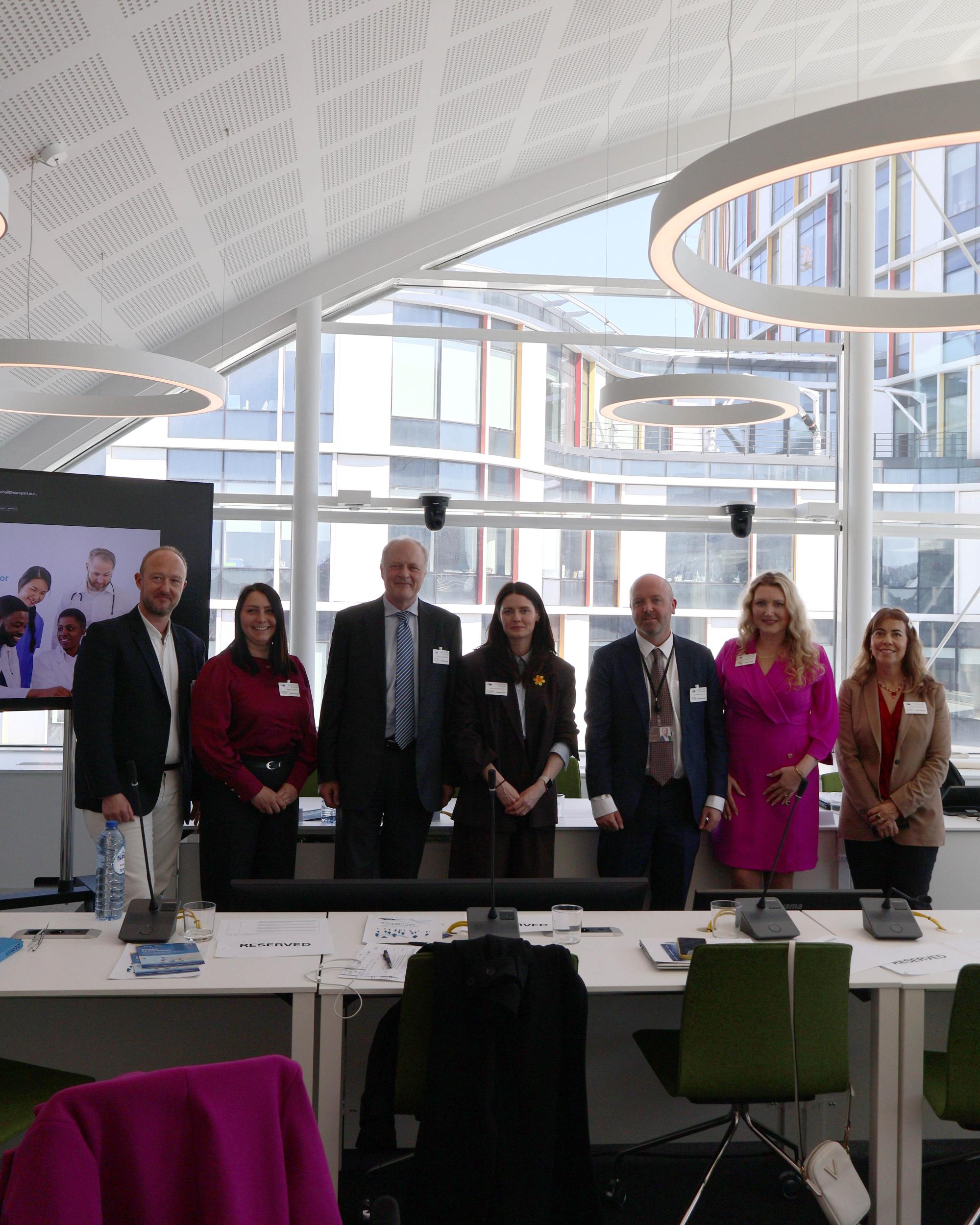
Associate Professor Soňa Čierniková from the Institute of Experimental Oncology at the Biomedical Center of the Slovak Academy of Sciences (BMC SAS) spoke on April 22, 2026, at the European Parliament in Brussels at a high-level event focused on bridging the gaps between countries in the field of cancer care. She was invited to the event, organized under the auspices of the European Parliament’s Intergroup on Cancer and Rare Diseases, as the sole representative from among the 11 countries visited by leading oncology experts as part of the international project Comprehensive Cancer Infrastructures for the European Union (CCI4EU).
At this event, titled “Addressing Inequalities in Cancer: the Role of Europe-Wide Networks and Infrastructures for Comprehensive Cancer Care”, Čierniková presented the results of the CCI4EU project, in which she serves as the principal investigator for Slovakia. She also participated in expert discussions focused on ways to reduce inequalities in comprehensive cancer care that persist across Europe.
“It was an immense honor and source of pride for me to present the results of the CCI4EU Deep Dive interventions at the European Parliament. As part of our work, we were able to secure the support and assistance of a team of nine leading European experts from various fields of oncology, who visited Slovakia on multiple occasions and worked alongside national experts on three key areas: developing the concept of a Comprehensive Cancer Center (CCC), building a comprehensive cancer infrastructure (CCI), and developing patient pathways for breast and colorectal cancer,” says Čierniková.
The event also included the presentation of a significant consensus policy document (Policy Brief) on the long-term vision for cancer care and research in Europe.
The event, organized by the European Cancer Organisation, was supported by the CCI4EU project and presented the results of key EU-funded initiatives focused on building oncology infrastructures and networks (CCI4EU, EUnetCCC, ECHoS, UNCAN-Connect, JANE-2). It also highlighted important insights into their sustainable impact within the European context.
The international CCI4EU Deep Dive expert team for Slovakia was led by Dr. Simon Oberst, Director of Quality and Accreditation at the Organisation of European Cancer Institutes (OECI), with joint meetings of national and international experts held in cooperation with the National Cancer Institute and the National Cancer Institute. The results brought concrete solutions in defined areas and significantly brought us closer to countries with long-established systems of comprehensive cancer care.
“Although we still have a long way to go, the important foundations have already been laid. The results obtained during the CCI4EU Deep Dive interventions in Slovakia served as the basis for the draft of the new National Cancer Program and its action plans for 2026–2030. If we can make the most of this opportunity, we can bring about real change for cancer patients and all citizens in Slovakia,” concludes Associate Professor Čierniková.
More about the event and program: https://lnkd.in/eut5ftfd
About the CCI4EU Project
The CCI4EU (Comprehensive Cancer Infrastructures for the European Union) project, part of the Horizon Europe Mission on Cancer, focuses on building capacity in research and innovation in comprehensive cancer care, as well as supporting EU member states and associated countries in strengthening, developing, and improving existing or future comprehensive cancer care infrastructure. It represents a significant contribution to reducing disparities in cancer care across Europe. The CCI4EU project consortium consists of 54 partner organizations from 27 EU member states and 5 associated countries, which are collaborating to develop recommendations for capacity building and the development of national and regional comprehensive cancer infrastructures. The main project coordinator is the Organisation of European Cancer Institutes (OECI).
Through the CCI4EU project, Slovak institutions secured a unique opportunity for targeted interventions known as “Deep Dive interventions.” This initiative involved assistance and support from a nine-member team of European experts from various countries from September 2024 to December 2025. Representatives of the collaborating institutions included experts from OECI, TUD Dresden University of Technology, the Portuguese Oncology Institute of Porto, the National Center for Tumor Diseases in Heidelberg, the National Institute of Oncology in Budapest, the Estonian Cancer Center, the University of Tartu, Riga East University Hospital, the Institut de Cancérologie de l’Ouest, Saint-Cloud Hospital, and the Masaryk Memorial Cancer Institute in Brno. Since Slovakia’s proposal was successfully selected from among 38 CCI projects, all expenses related to expert visits, their work, and travel reimbursements were covered directly from the project budget, which provided significant support for the systematic improvement of the oncology ecosystem in Slovakia. As part of our active collaboration on the project, we also secured a multi-day professional internship for four clinical oncologists from Slovakia at the renowned Christie Hospital (NHS) in Manchester, England. All costs for the professional internship were covered by the CCI4EU project.
Experts from across the healthcare, research, and education sectors, along with patient representatives, were involved in all activities. Collaboration with patient organizations was exceptionally close and serves as an example of best practice that can also be applied by CCIs in other countries. During the implementation of the Deep Dive interventions in Slovakia, the international expert team conducted joint visits to clinical, scientific, and educational institutions throughout Slovakia, including the BMC SAS and the Presidium of the Slovak Academy of Sciences.
Text: Soňa Čierniková, BMC SAS; E. Rybárová, BMC SAS
Photo: European Cancer Organisation, archive of Soňa Čierniková, BMC SAS