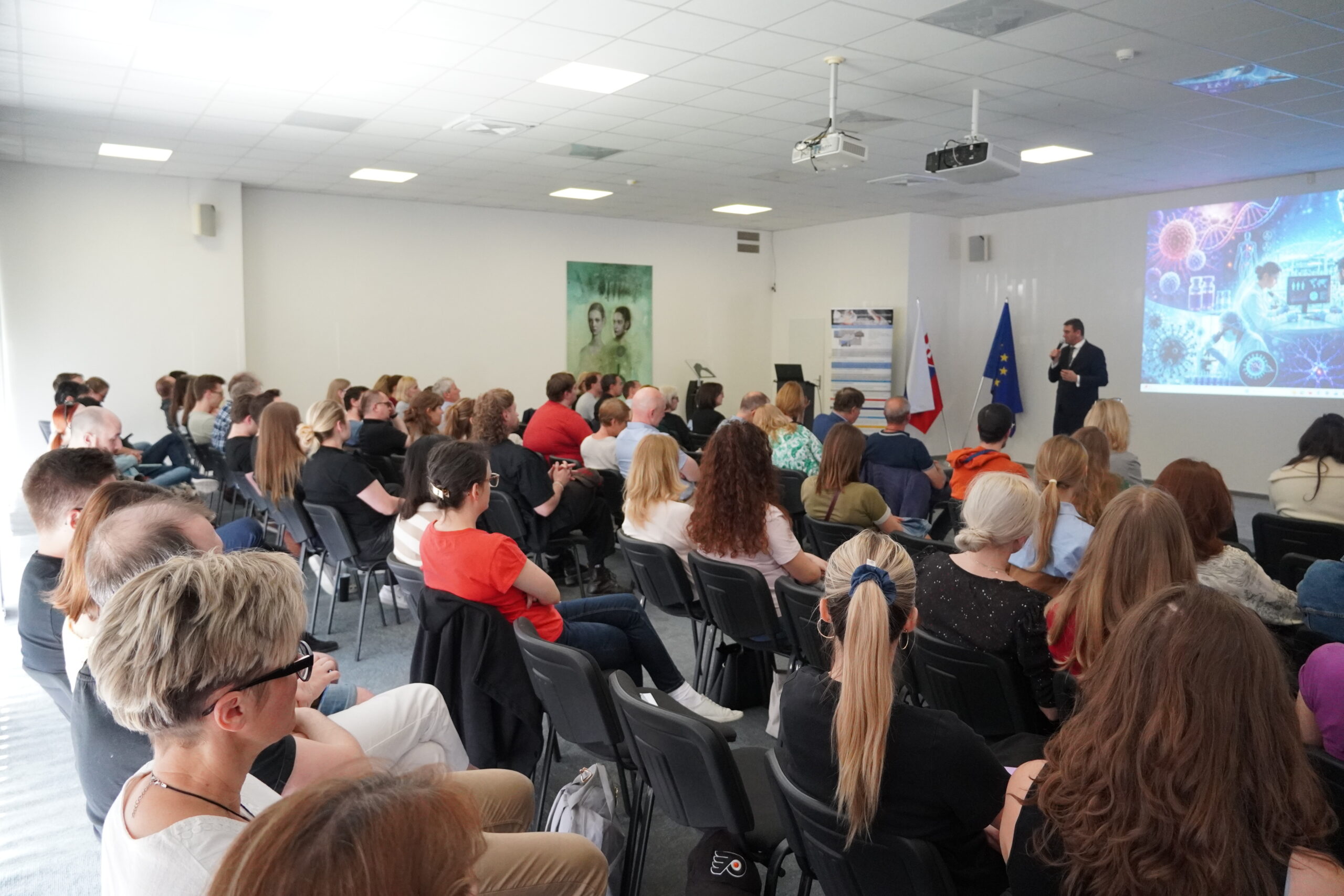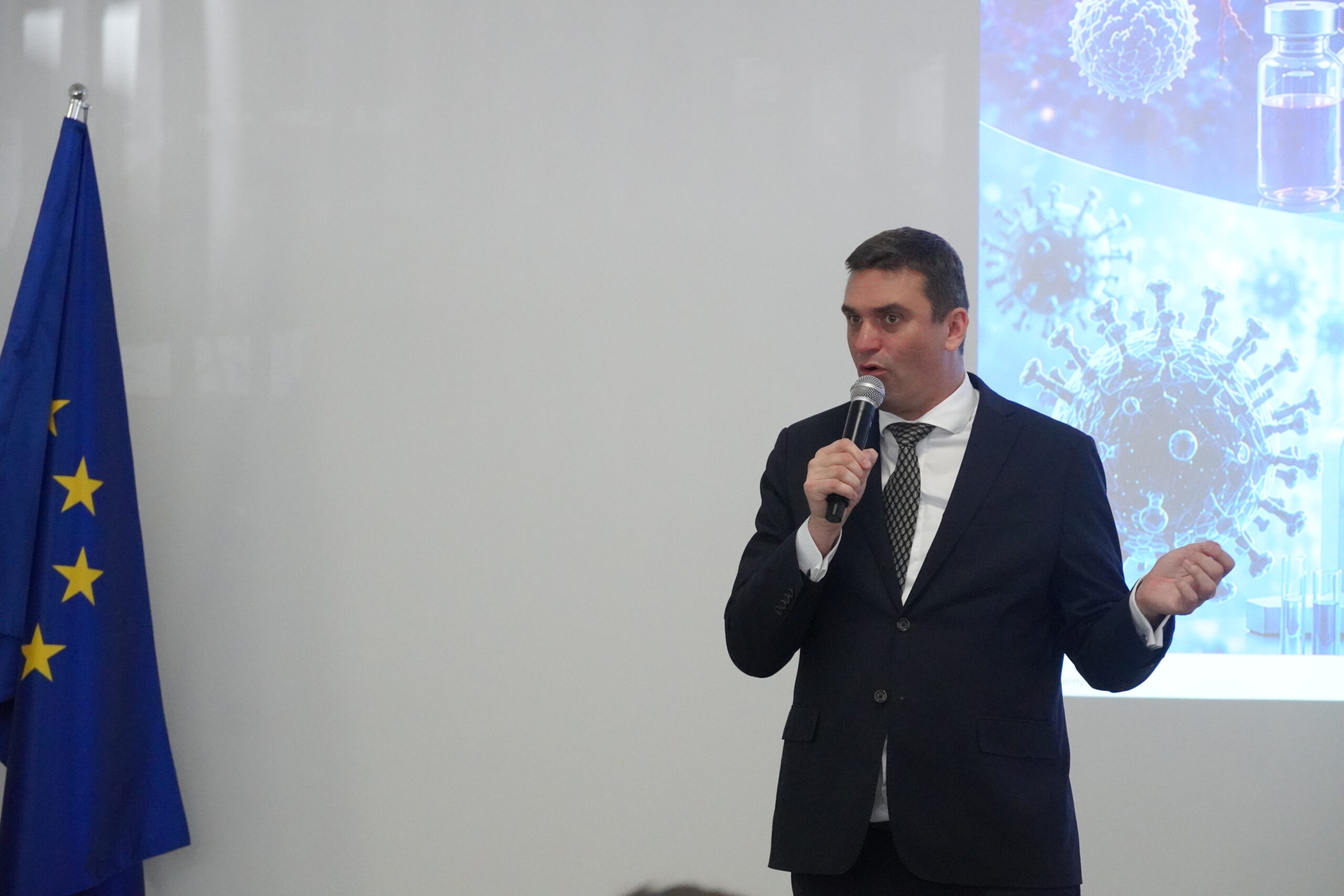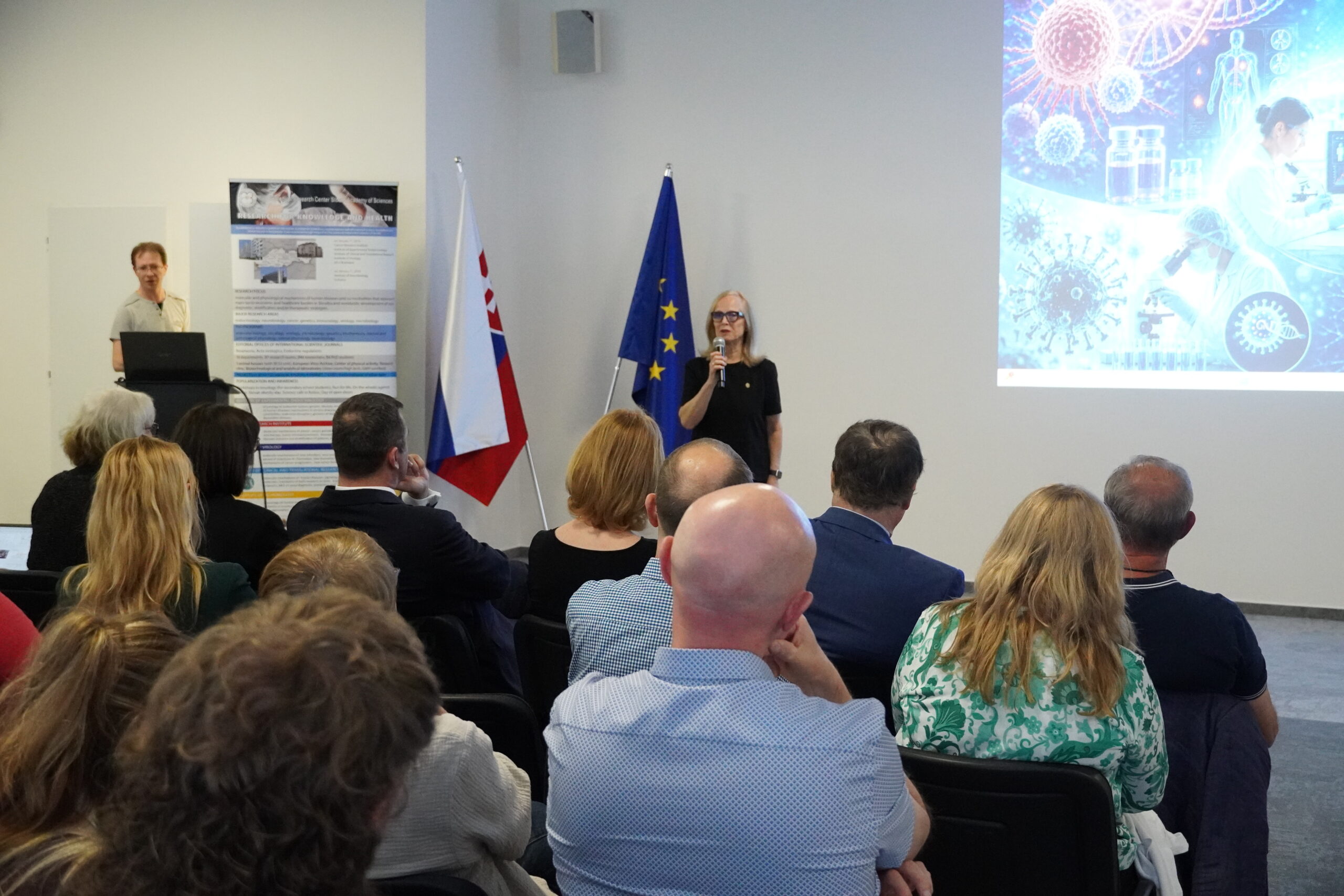
The European Molecular Biology Organization (EMBO) organized a special scientific seminar on May 20, 2026, to support Slovak contributions to European science. The event took place in the Dionýz Blaškovič Lecture Hall at the Institute of Virology of the Biomedical Center of the Slovak Academy of Sciences (BMC SAS) in Bratislava
In addition to presentations and discussions on the latest research findings, the event provided master’s and doctoral students as well as early-career researchers with information on funding opportunities from EMBO in Slovakia.
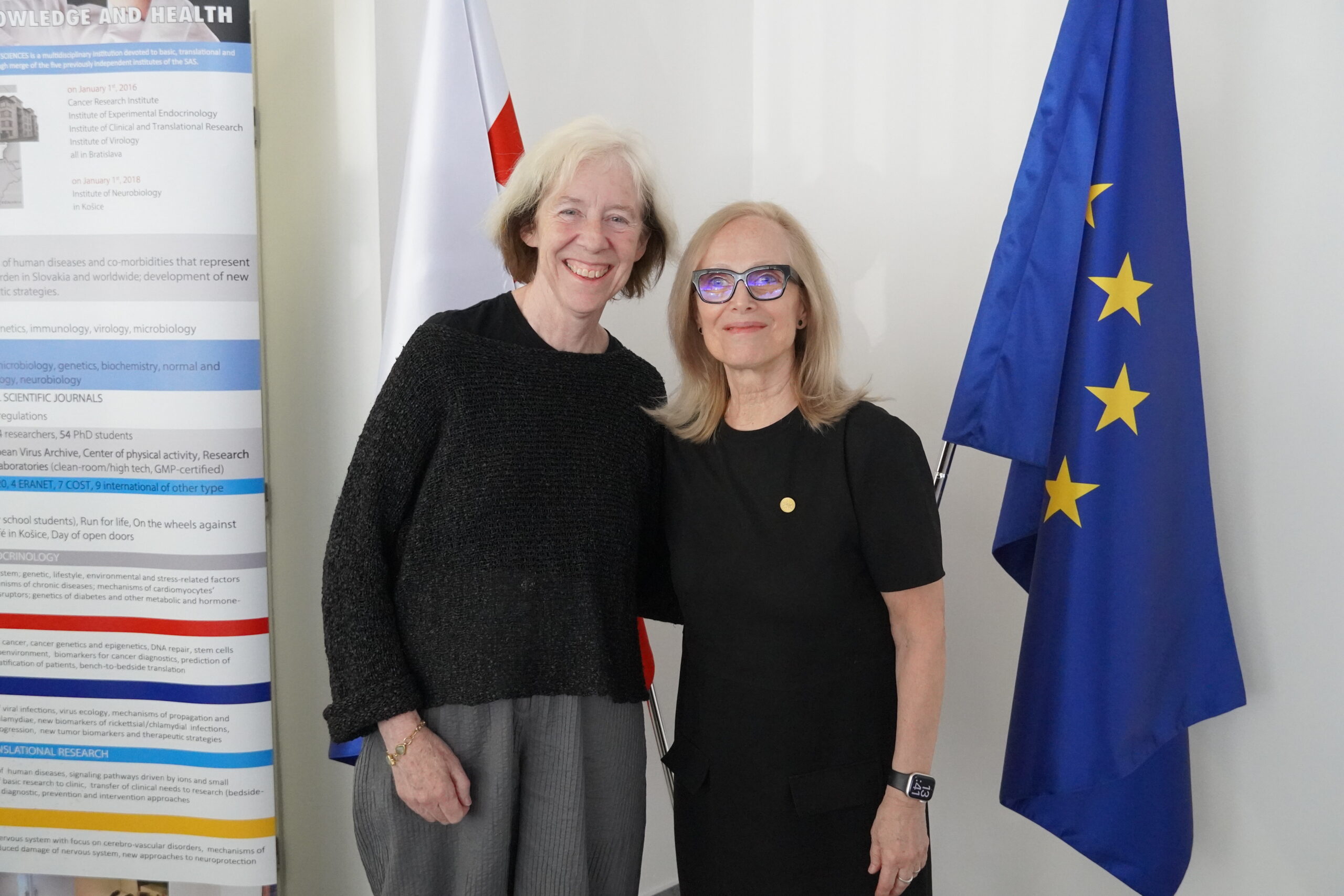
“EMBO is working hard to encourage more grant applications from Slovak scientists. I think the local talent is amazing, and we would like to encourage people to apply to our programs and help them succeed,” says EMBO Director Fiona Watt, who spoke at the event.
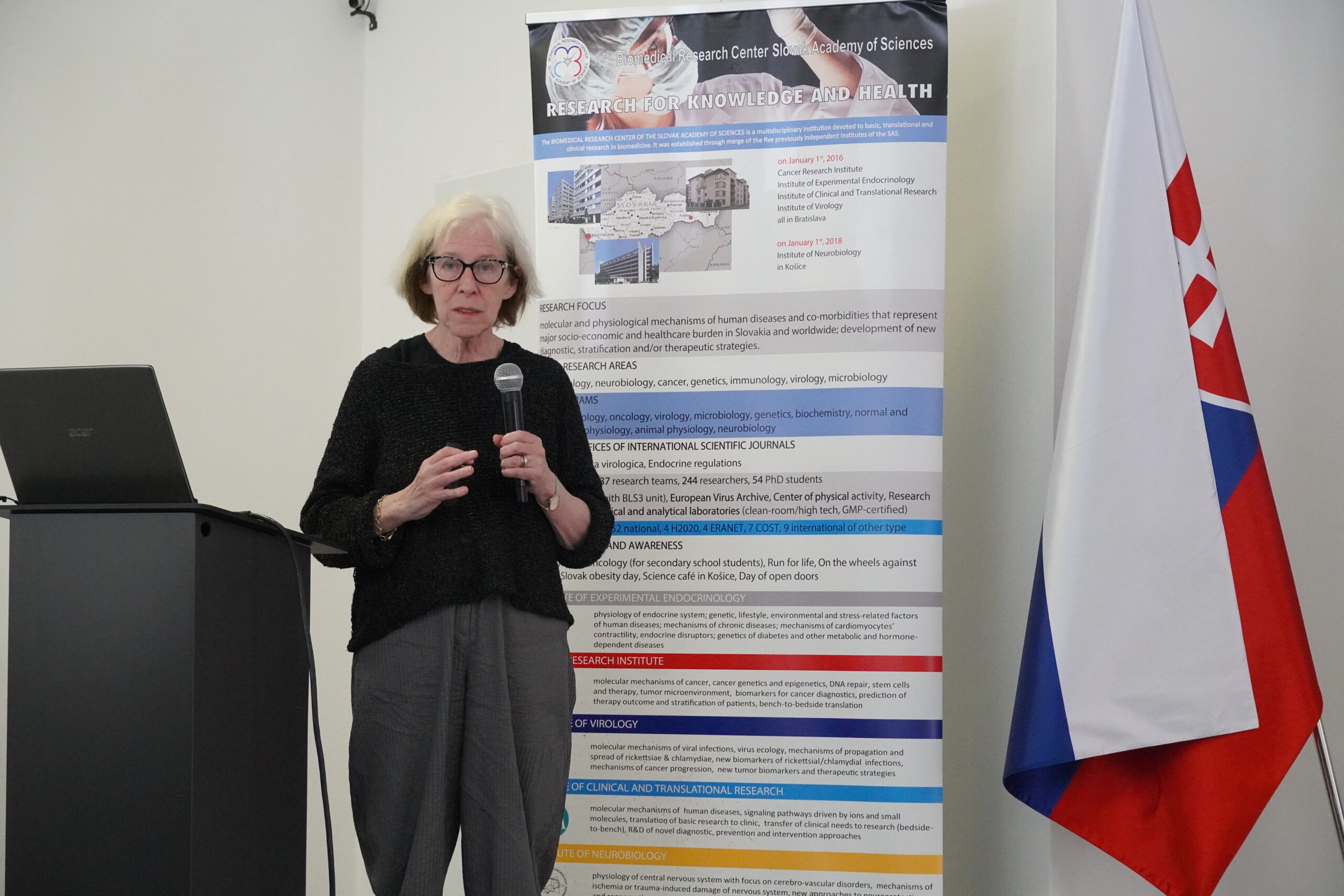
EMBO brings together renowned scientists, primarily from Europe but also from other countries around the world. Its members include nearly one hundred Nobel laureates. The only member of this organization from Slovakia is the Director General of the BMC SAS, Professor Silvia Pastoreková. She delivered a lecture at the event on the scientific research environment and science funding in Slovakia.
“Although the Slovak research community has high-quality human capital, it faces challenges related to insufficient or unsustainable funding. For young scientists, EMBO offers several support opportunities in the form of grants, training, and mentoring programs, which we have not yet fully utilized in Slovakia. We greatly appreciate that EMBO Director Fiona Watt came to Bratislava in person to support us in this regard,” says Silvia Pastoreková.
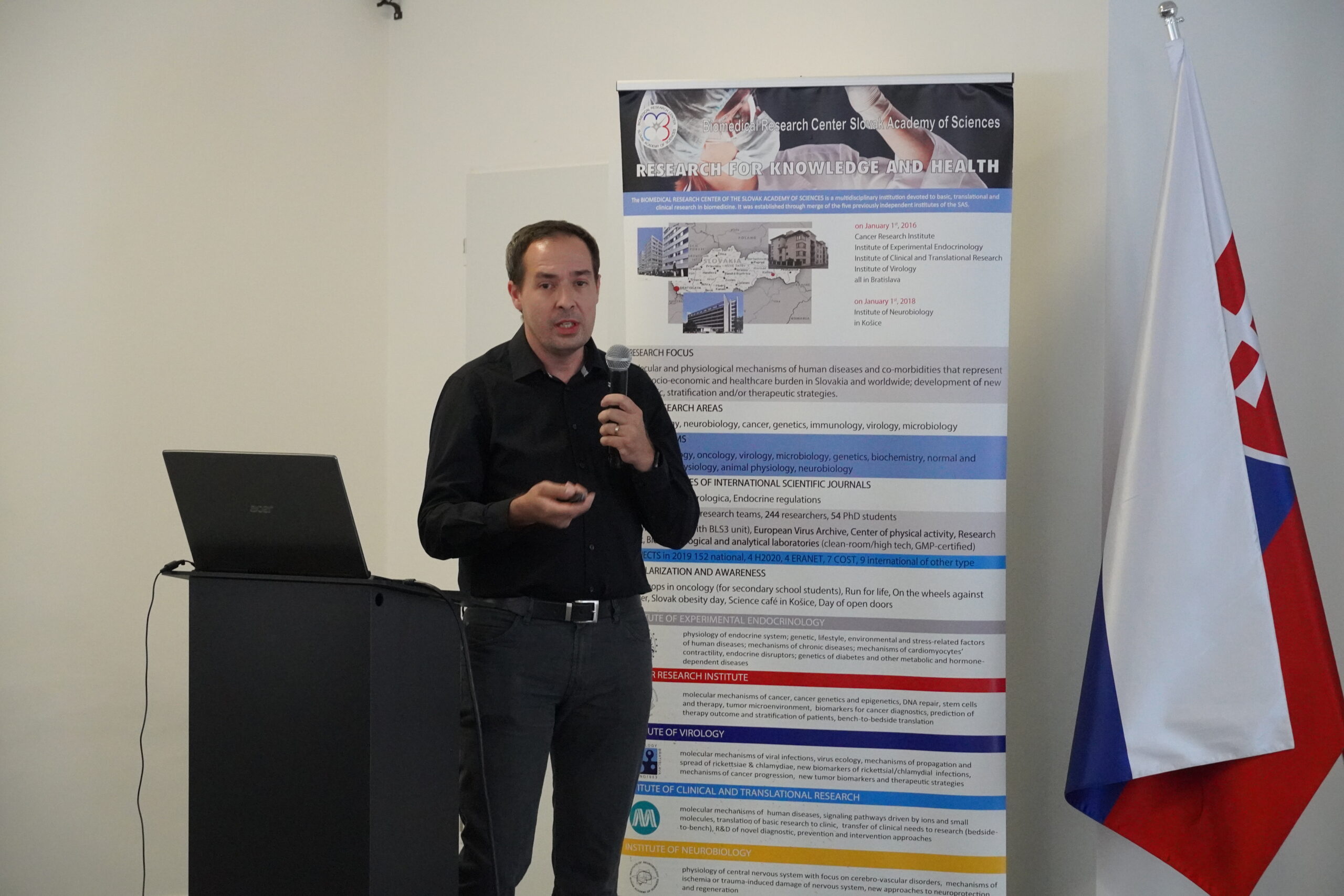
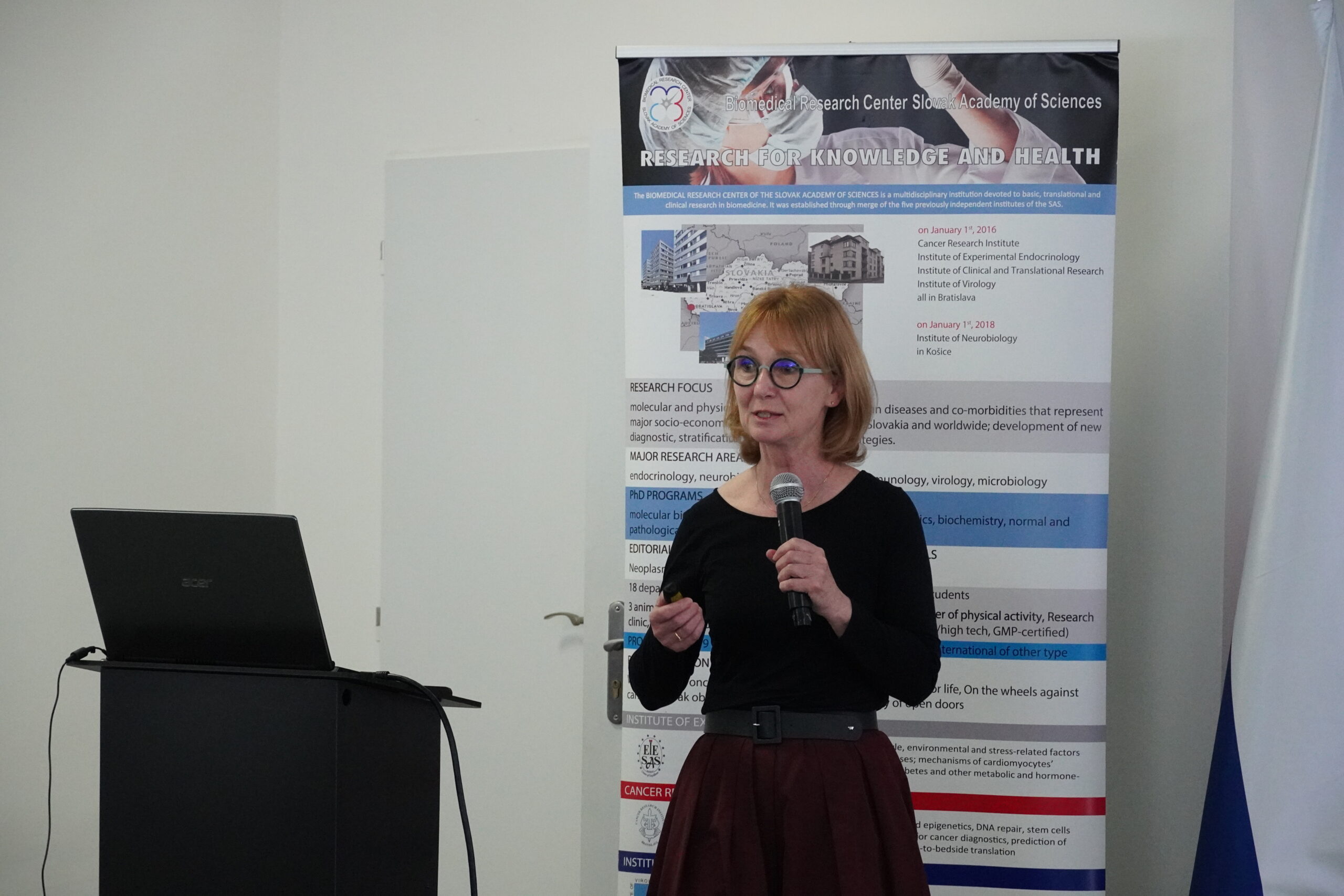
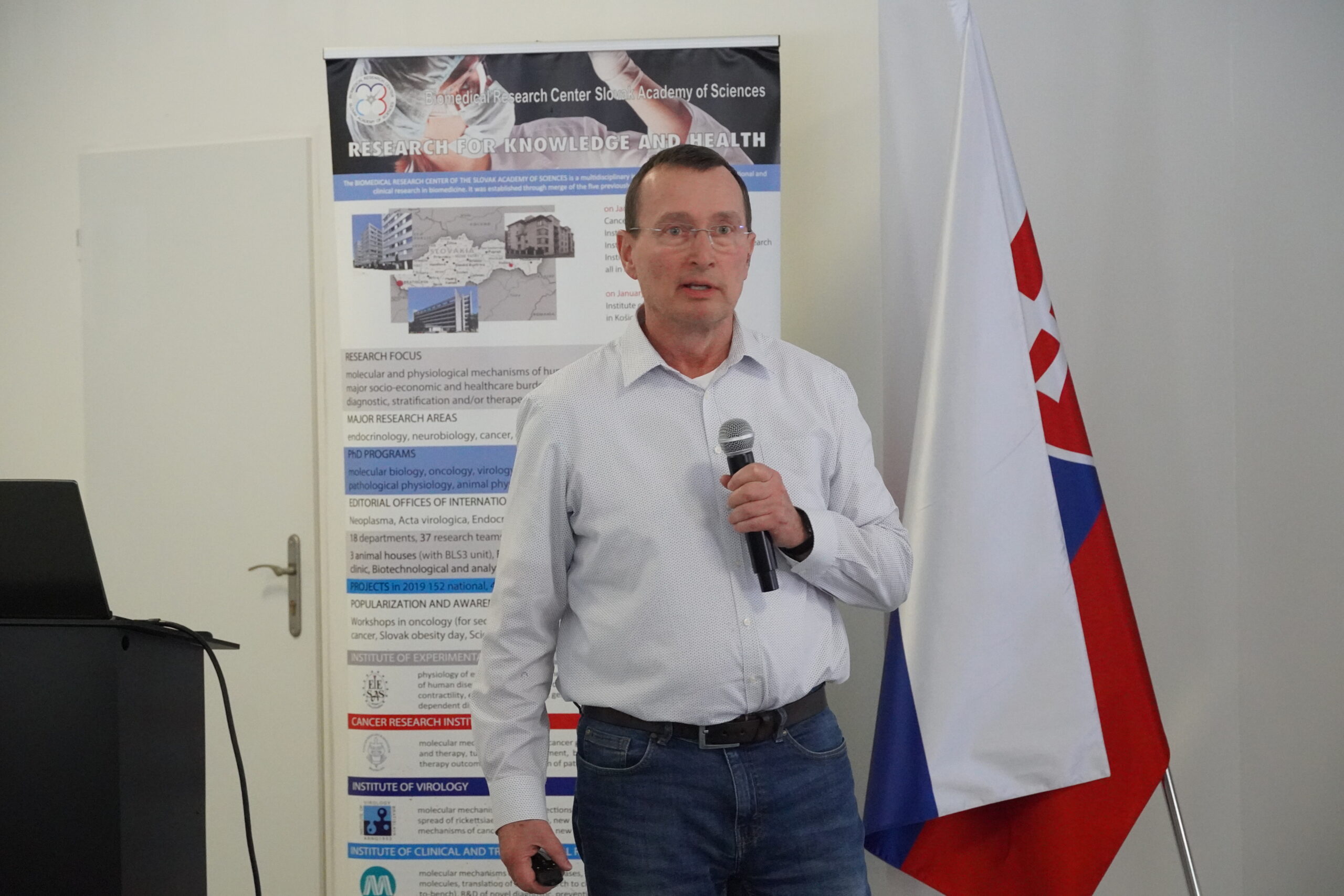
Speakers at the event included Martin Venhart, President of the Slovak Academy of Sciences (SAS) ; Katarína Mikušová from the Faculty of Natural Sciences at Comenius University in Bratislava; Peter Šebo from the Institute of Microbiology of the Czech Academy of Sciences; and Miroslav Baláž, Secretary for International Cooperation at the BMC SAS.
The networking event following the lectures also provided participants with an opportunity to meet with senior members of the EMBO community.
An overview of funding opportunities at EMBO can be found here: https://www.embo.org/funding/
Four questions for EMBO Director Fiona Watt
What is the main mission of EMBO?
The main mission of EMBO is to support life sciences, recognising excellence and creating an environment where scientists can achieve their best work. And we are focused very much in Europe, although we have partnerships around the world as well.
Why did you decide to come to Slovakia and especially to the Biomedical Research Center of the SAS?
I was excited to come because Slovakia is one of the 32 countries in Europe who are part of the funding agency for EMBO. And I was particularly excited to come to this institute because Silvia Pastorekova is at the moment our only EMBO member in Slovakia. I’m a huge fan of her work and I know how much effort she’s put into making a great research centre. So it was my real pleasure to come here.
What has led you to start a career in science?
I believe that some children are born scientists and I was certainly one of those. I was always interested in science from the very beginning. To be able to enjoy a career as a scientist is a huge privilege. I study stem cells, particularly in the skin. But alongside my academic research I’m very interested in the way science works, so I’m interested in careers, in science funding and in publishing. And one of the joys of leading EMBO is just seeing how science works around Europe. That’s great.
Slovak scientists are currently not using all the opportunities that EMBO is offerring. How could this be improved?
EMBO is very keen to encourage more applications from Slovakian scientists at all levels. If I achieve one thing on my visit, it will be one extra successful grant application from here because I think the talent is amazing and we would like to encourage people to apply to our schemes and hope that they will be successful. Slovakian scientists can apply for postdoctoral fellowships, science exchange grants and the young investigator programme. They can also host courses and conferences – so there are many opportunities.
Text a foto: E. Rybárová, BMC SAS