


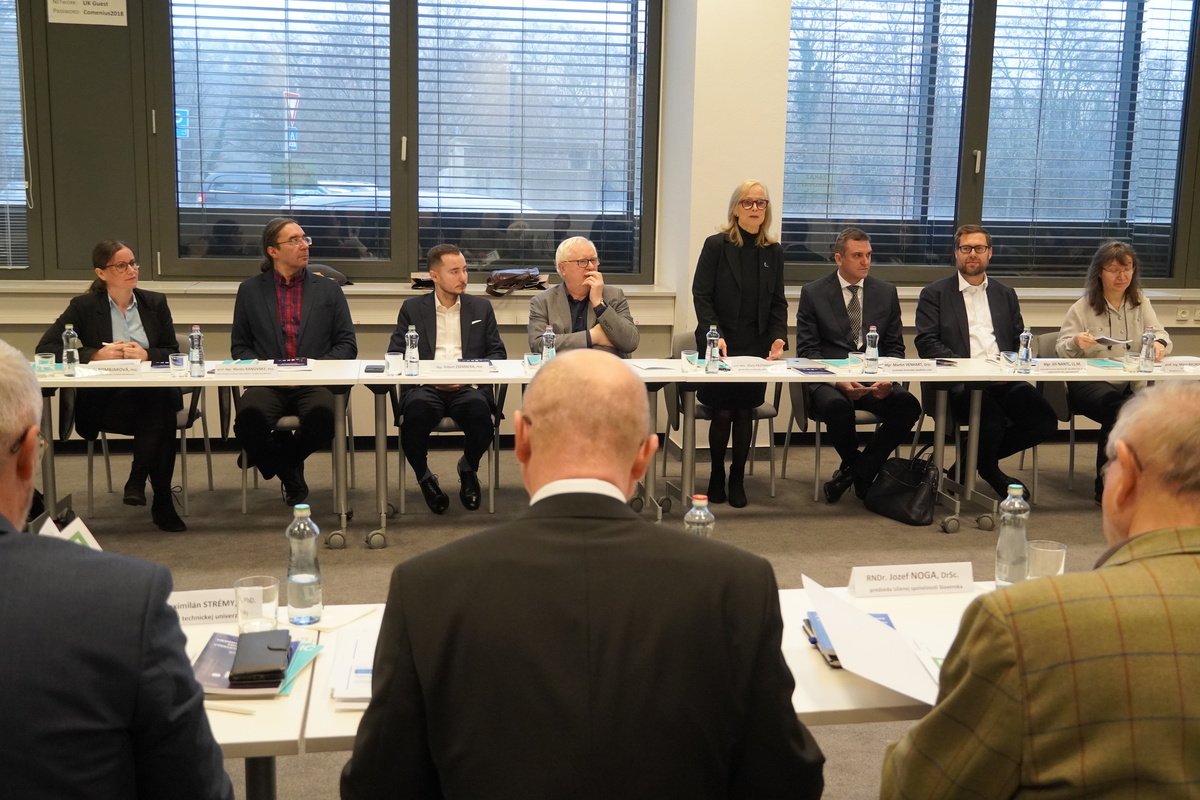
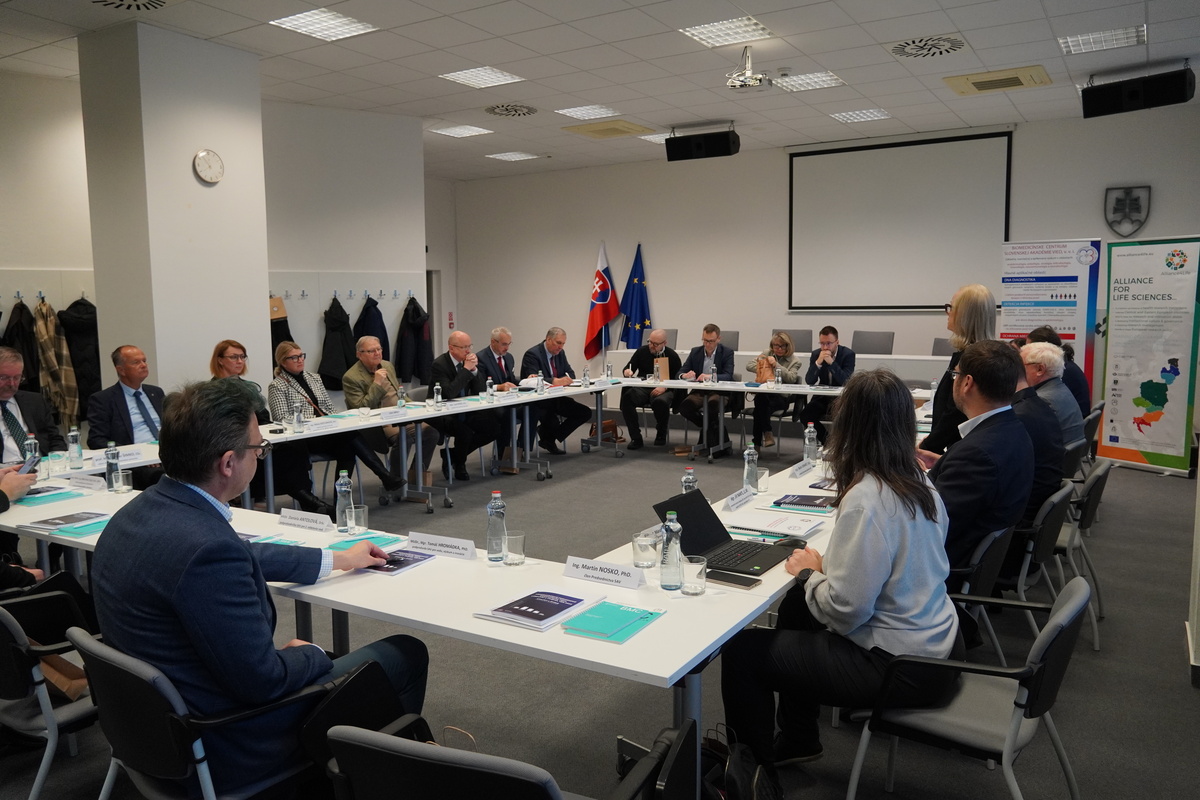
Current trends and challenges in research assessment, as well as opportunities to participate in reforming its evaluation, were the topics of discussion at the National Round Table on Science Policy on December 9, 2025, at the Science Park of Comenius University in Bratislava. The event was organized by the Biomedical Research Center of the Slovak Academy of Sciences (BMC SAS) as one of the key activities of the partners of the international network Alliance4Life (A4L), which aims to contribute to the advancement of life sciences in Central and Eastern Europe. The round table participants supported the importance of qualitative research evaluation with responsible use of metrics and agreed to conduct a survey of the forms and levels of evaluation in institutions conducting research in Slovakia.
“Research evaluation reform is not just about changing the way we look at the use of metrics—it is an opportunity to create a healthier research environment that values quality, openness, and diversity,” said Silvia Pastoreková, Director General of BMC SAS, who led the event.
The round table was attended by representatives of the Slovak and Czech Ministries of Education, the Slovak Academy of Sciences, universities, KInIT, VAIA, APVV, and the A4L_BRIDGE project consortium. The main topic was the comprehensive evaluation of science and research, as well as opportunities and examples of good practice offered in this area by the global Coalition for Advancing Research Assessment (CoARA).
CoARA brings together organizations committed to reforming methods and processes for evaluating research, researchers, and research organizations. It has more than 800 signatories worldwide, but only a few in Slovakia so far (SAS, BMC SAS, UK, MŠŠVaM, KInIT, VŠMU, SAAVŠ). The basic principles of the reform are quality over quantity, recognition of diverse scientific outputs, and a move away from evaluation based predominantly on quantitative data and rankings.
“The long-term success of a research institution cannot be achieved without the satisfaction and motivation of outstanding scientists, which is largely influenced not only by the internal culture of the institution, its mission, strategic goals, and working environment, but also by the conditions created for institutions and scientists by science policy at the national level. Current research evaluation methods rely heavily on metrics based on the number and parameters of publications, such as the quality of journals and the number of citations, and often do not take into account the wide range of contributions made by researchers, for example in the form of data, algorithms, methods, and the like,” says Silvia Pastoreková.
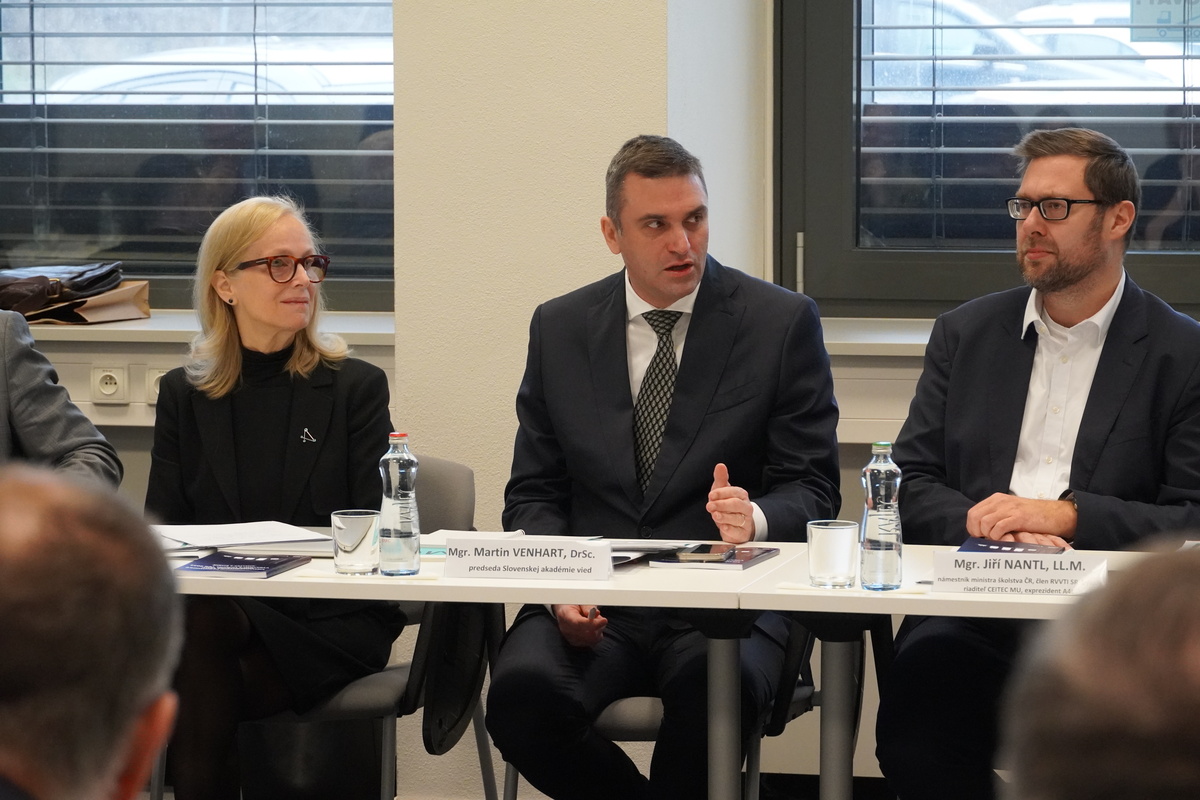
At the meeting, Martin Venhart, President of the Slovak Academy of Sciences, pointed out that such performance evaluation globally reduces the quality of science: “Average science will bring more points in performance evaluation. We have to break away from this. Although on average we are not far behind our neighboring countries in terms of the number of publications, we are lagging far behind when it comes to top scientific performance.”
Róbert Zsembera, State Secretary of the Ministry of Education, Research, Development and Youth of the Slovak Republic (MŠVVaM), emphasized the strengthening of qualitative research evaluation in Slovakia through VER evaluation with the participation of foreign evaluators. Martin Kánovský from the Science Strategy Department of the MŠVVaM added that the evaluation now also assesses the creative environment and social impact of research. He pointed out that VER evaluation does not provide recommendations on how and what to improve, because “excellence can be achieved internally in various ways.”
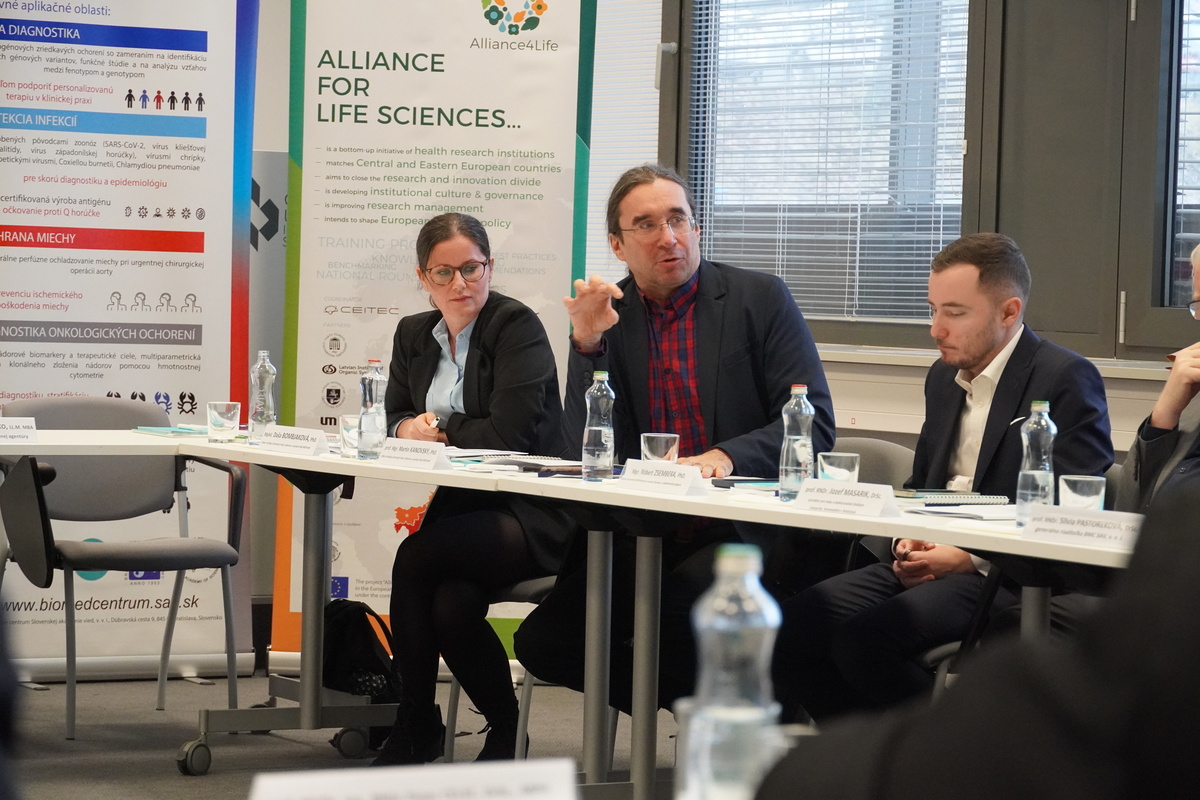
Jiří Nantl, Deputy Minister of Education of the Czech Republic, founder of Alliance4Life, and former director of CEITEC at Masaryk University in Brno, elaborated on this topic and pointed out the different levels of evaluation, which should complement each other but at the same time remain autonomous to a certain extent. The first is the evaluation of institutions as a whole, in which the state should assess their qualitative contribution and social impact; the second is the evaluation within institutions through international scientific councils; and the third is the evaluation of individual scientists. He emphasized that, in the case of research group leaders, not only performance but also leadership style and managerial skills should be taken into account. In this context, Silvia Pastoreková mentioned that BMC SAS is preparing leadership training for research group leaders next year with top experts from the prestigious European Molecular Biology Organization (EMBO).
Mária Bieliková, Director General of the Kempelen Institute of Intelligent Technologies (KInIT), added that it is very important to encourage leaders to give feedback and teach them how to do so. She emphasized that the vision and mission of the institution must be taken into account and that not all institutions should be evaluated equally. She also pointed out the pitfalls of metrics, referring to a quote by William B. Cameron: “Not everything that can be counted counts. Not everything that counts can be counted.”
Jozef Masarik, Vice-Rector for Science and Doctoral Studies at Comenius University, pointed out that when evaluating science, it is also necessary to take into account how research contributes to solving social problems and the quality of education.
Róbert Redhammer, Chairman of the Executive Board of the Slovak Accreditation Agency for Higher Education, added that a focus on metrics leads to a loss of the ability to critically assess research content through peer review, which is emphasized in the research evaluation reform.
All participants in the event also agreed that the evaluation of research quality should be translated into effective systemic support, which is a reflection of the maturity of society.
After a lively discussion, Silvia Pastoreková presented a proposal to conduct a survey of the levels, forms, and frequencies of research evaluation in various educational, scientific, and research institutions in Slovakia. The survey will take place in early 2026. Its aim is to understand how institutions are evaluated by external authorities, how organizations internally evaluate research teams and individual researchers, and how they would like this to change.
The information should be used as a basis for Slovakia’s national platform within the CoARA initiative to formulate an action plan for implementing progressive changes in research evaluation and harmonizing evaluation principles at various levels. The meeting participants supported this intention and agreed to participate in the survey. The round table will be followed by further activities, including a CoARA platform meeting next year, at which the survey results will be evaluated.
Text and photo: E. Rybárová, BMC SAS